Post Quantum Leap 3.5 is out. The biggest change is a rework of migration planning: the plan is now measured against any defined policy — and a policy can be any standard you answer to.
Planning then answers three questions, per policy: where do we stand? What does it demand? How do we get there?
Cohorts: what moves together
A cohort groups what migrates together — as a saved rule, for example “all RSA under 2048”. It is updated with every scan: a new system that matches the rule is in the cohort without anyone maintaining a list.
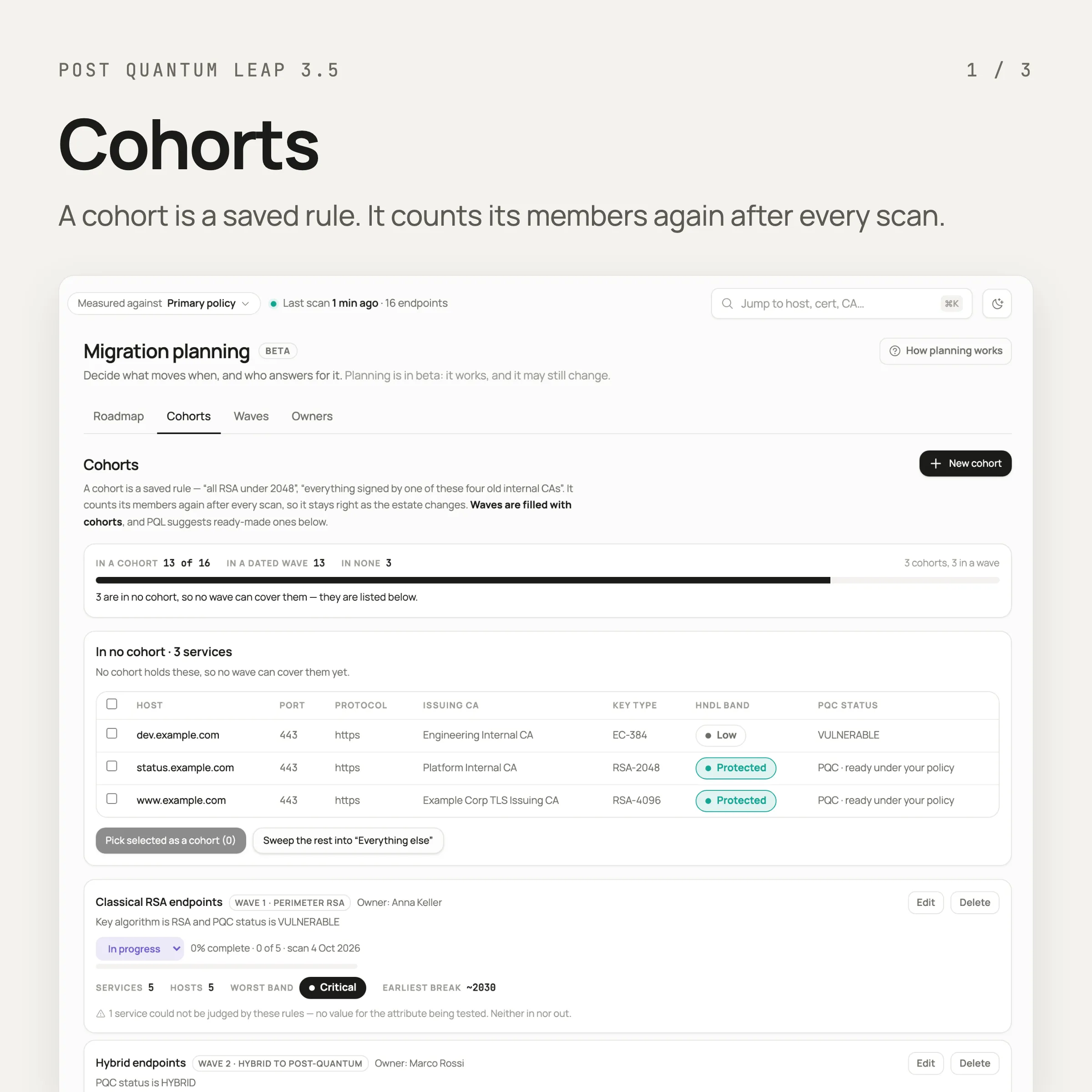 Cohorts in planning: saved rules instead of maintained lists. (Demo data)
Waves: when, and who
Waves put cohorts on dates, with an owner each. And they show what the plan achieves: how far exposure comes down, and by when.
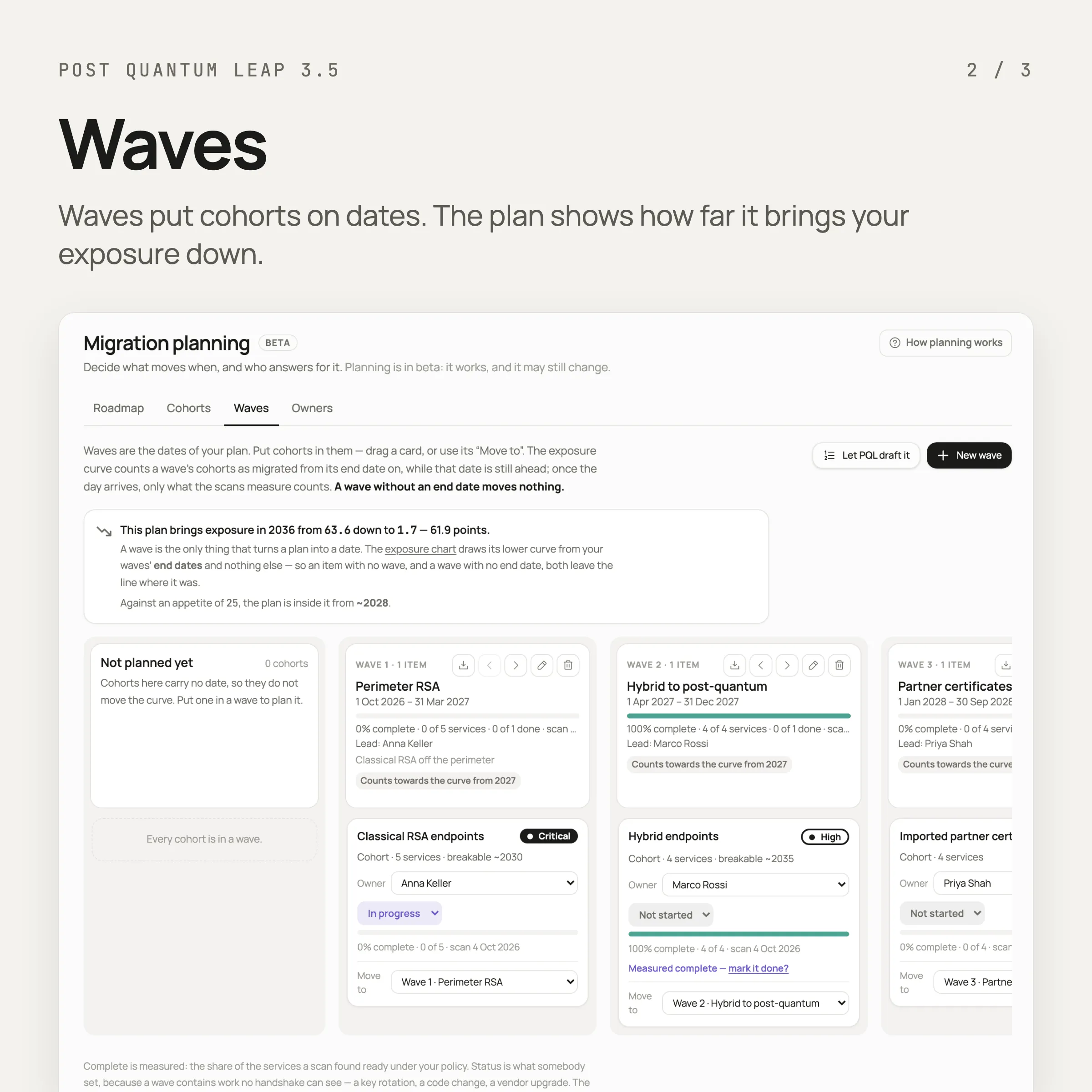 Three waves, one owner each — and the curve showing what the plan does to exposure. (Demo data)
Policies: what counts as quantum-ready, and by when
A policy says what counts as quantum-ready and by when. NIST PQC, CNSA 2.0, DORA, BSI TR-02102, FINMA Guidance 05/2026 and more are built in. One is your primary; you track others beside it — or fork your own from any of them.
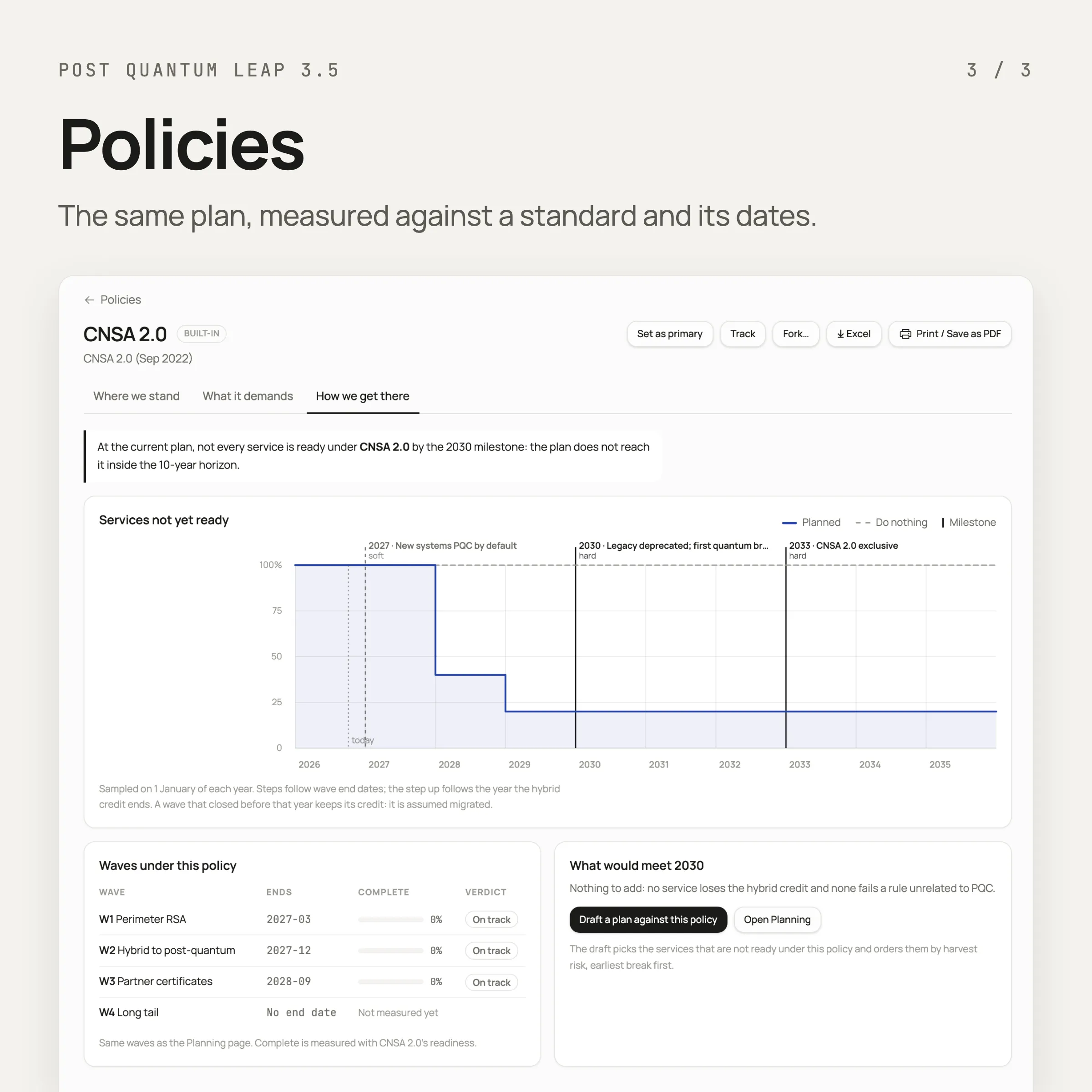 Your own plan, measured against a policy’s milestones. (Demo data)
Also in 3.5
Security improvements following a penetration test and a code review, and a signed software bill of materials for the container images.
The details are in the release notes on the support site. Rather see it than read it? 30 to 45 minutes, live.